
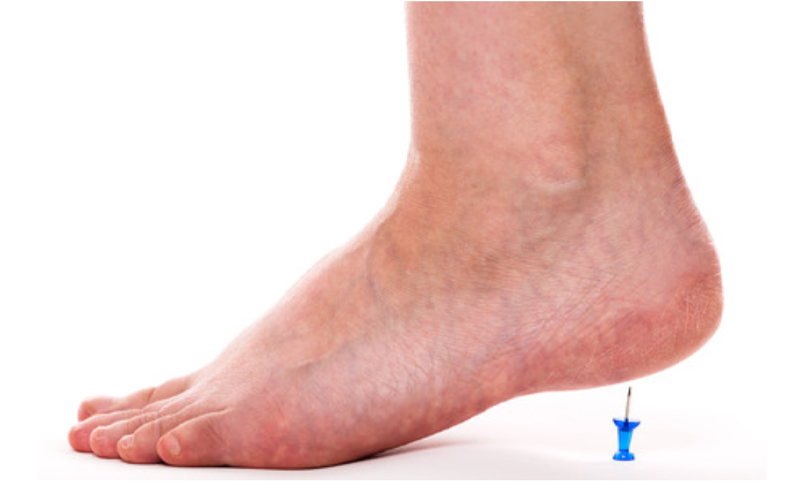
FIRST STEPS
What should you do when your heel hurts?
The heel bears substantial loads during walking and running. If pain develops, temporarily reducing the activity that triggers it and monitoring symptoms is a sensible first step.
Seek medical assessment if the pain is severe or persistent, follows significant trauma, or makes it difficult to bear weight. A physical examination helps identify the source; additional tests are requested when needed.
POSSIBLE CAUSES
What are the most common causes?
Pain after an injury
Stepping on a stone or sustaining a direct impact may injure the heel's fat pad, causing pain when putting weight on the foot.
Plantar fasciitis
This may cause pain underneath and toward the inner side of the heel, often worse with the first steps in the morning or after rest. Running and jumping can aggravate symptoms.
Heel spur
A bony growth that may appear on imaging at the underside or back of the heel bone. Its presence alone does not establish the cause of pain or indicate a need for surgery.
Haglund deformity
A bony prominence at the upper back of the heel bone that may be associated with local irritation and symptoms around the Achilles tendon.
INDIVIDUALIZED TREATMENT
How is heel pain treated?
After an injury: reducing weight-bearing, applying ice for short periods and elevating the foot may help during the first few days. When pain is more severe, crutches may be needed to limit weight-bearing, depending on the assessment.
For plantar fasciitis: guided calf and plantar fascia stretching, activity modification and measures to reduce excessive loading may form part of treatment. Footwear adjustments and heel supports can be helpful in selected cases.
For pain at the back of the heel: conditions involving the Achilles tendon and Haglund deformity require specific assessment. Treatment usually begins with nonsurgical measures; procedures may be considered when symptoms persist despite appropriate care.
Pain-relieving or anti-inflammatory medications may be considered individually, taking contraindications and professional guidance into account.
ORTHOPEDIC ASSESSMENT
Is heel pain limiting your walking or sports activities?
An individualized assessment can help clarify the cause of pain and plan recovery around your activities.