Warm up gently when appropriate before exercising. The repetitions and frequencies follow the source material but are not an individualized prescription.
Important: after recent surgery, injury, significant pain or worsening symptoms, seek professional advice before starting or continuing. Do not force painful movements.
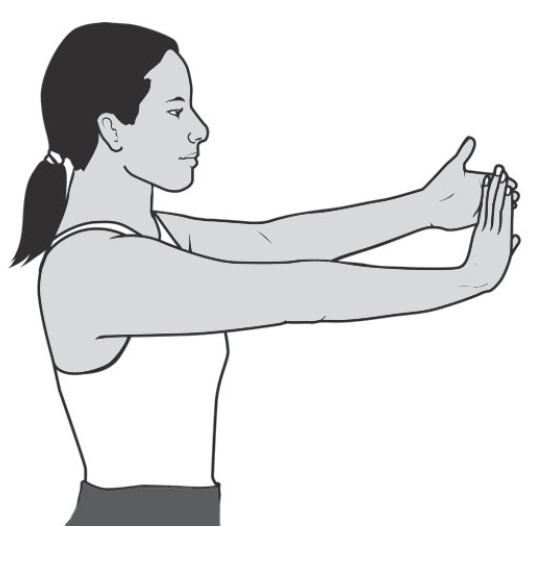
Instructions: Extend one arm and hold the hand up as if signaling 'stop'. Use the other hand to gently pull the palm back until you feel a forearm stretch. Hold for 15 seconds. Repeat five times, then switch arms.
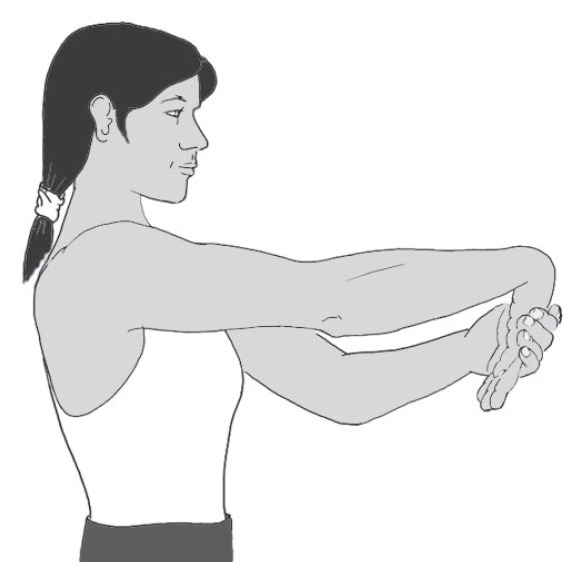
Instructions: Extend the arm with the palm facing down and bend the wrist so the fingers point down. Gently draw the hand toward your body until you feel a stretch on the outer forearm. Hold for 15 seconds. Repeat five times, then switch arms.
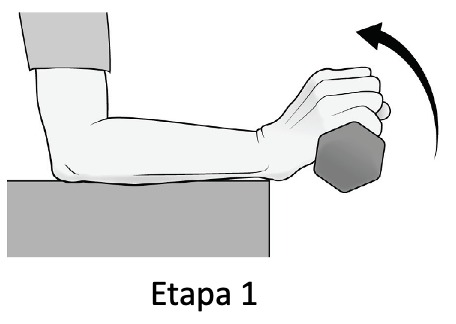
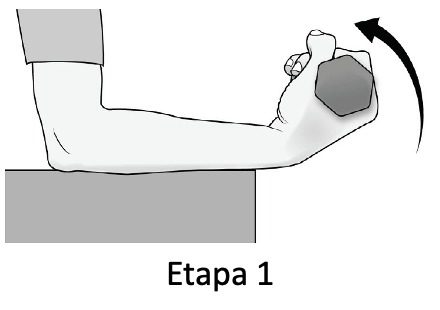
Bend your elbow to 90 degrees and rest your forearm on a table, with your wrist at the edge.
Slightly straighten your elbow while keeping your wrist supported on the table.
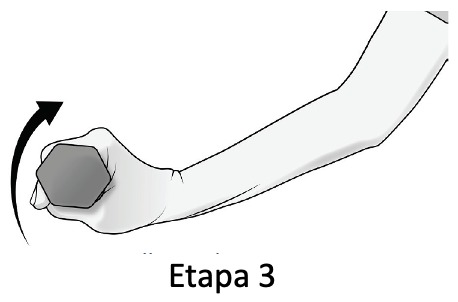
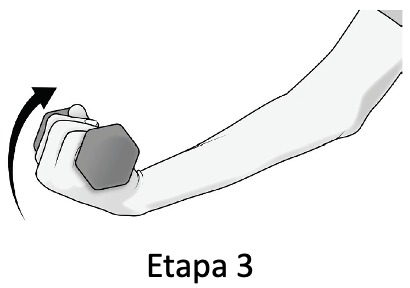
Fully straighten your elbow and extend your wrist, with your wrist no longer supported on the table.
Progress gradually according to the program without worsening pain.
Instructions: With your palm down, extend the wrist as far as comfortable. Hold for one second and lower slowly over three seconds. Begin without weight and build to 30 repetitions. Once you can complete 30 repetitions on two consecutive days without increased pain, progress to 500 g, eventually up to 1.5 kg using the same criteria.
Tip: Do not allow the weight to pull your hand down rapidly.
Bend your elbow to 90 degrees and rest your forearm on a table, with your wrist at the edge.
Slightly straighten your elbow while keeping your wrist supported on the table.
Fully straighten your elbow and flex your wrist, with your wrist no longer supported on the table.
Progress gradually according to the program without worsening pain.
Instructions: With your palm up, flex the wrist as far as comfortable. Hold for one second and lower slowly over three seconds. Begin without weight and build to 30 repetitions. Once tolerated for two consecutive days without increased pain, progress to 500 g, eventually up to 1.5 kg.
Tip: Control the lowering phase; do not let the weight drop.
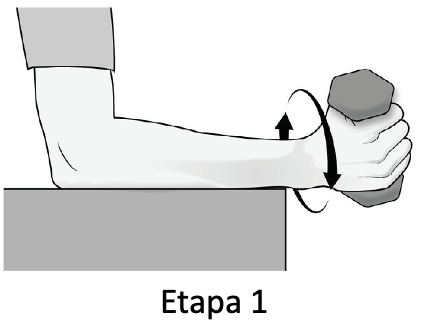
Bend your elbow to 90 degrees and rest your forearm on a table, with your wrist at the edge.
Slightly straighten your elbow while keeping your wrist supported on the table.
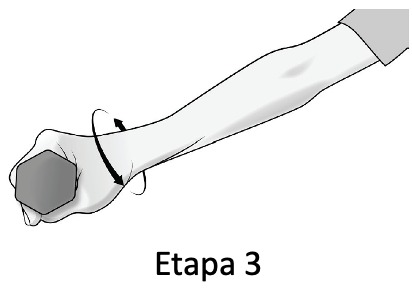
Fully straighten your elbow and raise your arm so it is no longer supported on the table.
Progress gradually according to the program without worsening pain.
Instructions: Start with the palm facing sideways. Slowly turn the palm up, return to the start, then turn it down and return. This is one repetition. Build to 30 without weight. If 30 repetitions are tolerated on two consecutive days without increased pain, progress from 500 g toward 1.5 kg.
Tip: When using a dumbbell, rotate the forearm through a comfortable controlled range.
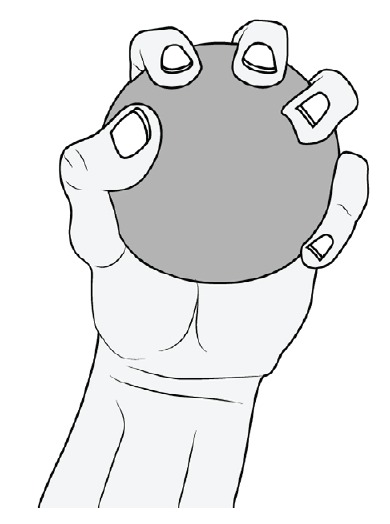
Instructions: After the preceding exercises, squeeze a soft strengthening ball with controlled pressure and release slowly. Follow the elbow and forearm positioning progression recommended by your clinician.
Additional tip: Avoid compensating with shoulder or wrist movement.
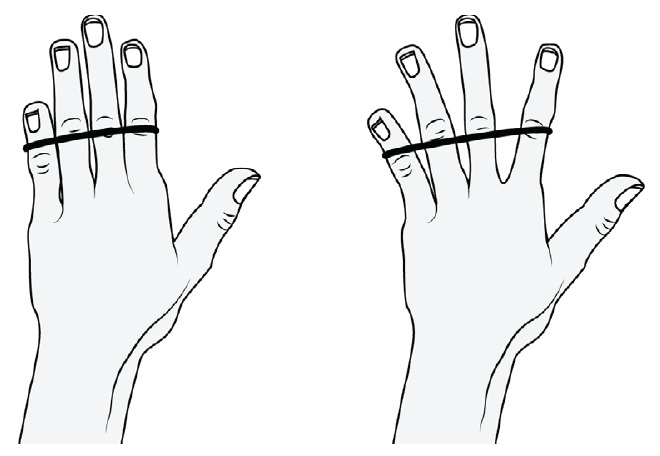
Instructions: After the preceding exercises, place an appropriate elastic band around the fingers and slowly spread them apart against resistance. Return with control.
Additional tip: Avoid abrupt movements and use only comfortable resistance.
Source and credits
Source: Therapeutic Exercise Program for Epicondylitis (Tennis Elbow / Golfer’s Elbow), American Academy of Orthopaedic Surgeons (AAOS). Translated and adapted by Dr. Thiago Righetto. Original AAOS illustrations reproduced with permission as reported by Dr. Thiago Righetto. This is not an official AAOS publication and is not endorsed by AAOS.
Educational material that does not replace individualized assessment.