
Stretching or a minor ligament injury; stability is generally preserved.
ANKLE · SPORTS INJURIES
Ankle sprain: treatment and return to sport.
Most ankle sprains improve without surgery or prolonged rigid immobilization. Appropriate protection and early rehabilitation help restore movement, strength and confidence.
UNDERSTANDING THE INJURY
What happens when you sprain your ankle?
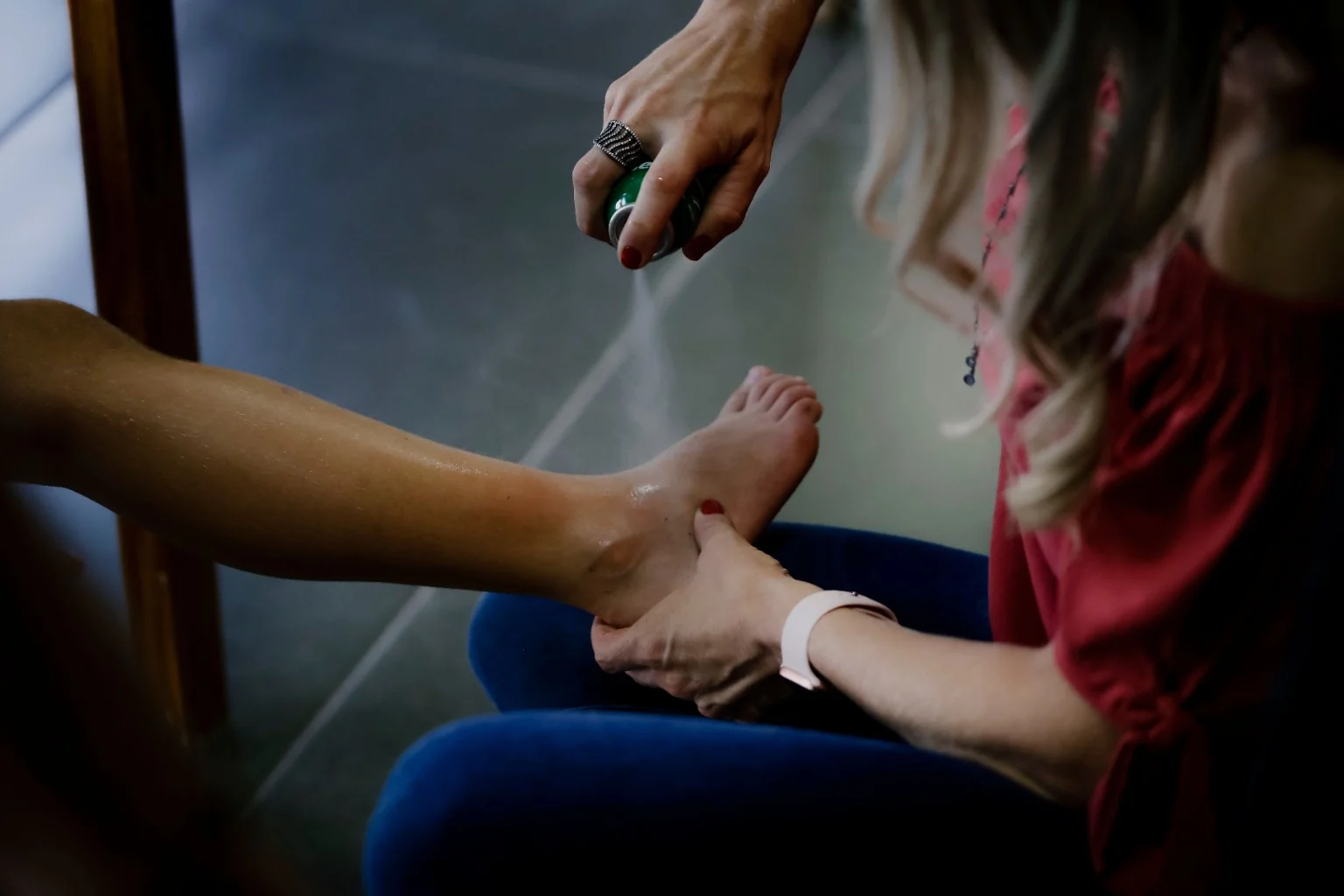
An ankle sprain occurs when a movement stresses the ligaments beyond their capacity. The most common pattern affects the lateral ligaments, usually when the foot turns inward. The anterior talofibular ligament (ATFL) and calcaneofibular ligament (CFL) are frequently involved.
Pain, swelling, bruising and difficulty bearing weight are common. Assessment also aims to identify fractures and associated cartilage, tendon or syndesmotic injuries.
Not every sprain requires an MRI.
Clinical examination guides the need for X-rays, including the Ottawa ankle rules, and additional imaging when associated injuries or unexpected recovery are suspected.
A more substantial ligament injury with variable pain, swelling and functional limitation.
A complete ligament tear and possible instability. Even at this grade, surgery is not automatically required.
CURRENT TREATMENT
Walking boot or removable ankle brace?
For most lateral ankle sprains, functional treatment with external support, progressive loading and exercise is preferable to prolonged immobilization.
Most cases: removable functional support
Stabilizing braces or removable supports protect the ankle while allowing movement and gait recovery to begin as tolerated.
The support selected depends on pain, stability and the patient's activities.
Severe cases: short-term rigid protection
A walking boot or other more rigid support can be useful for selected severe sprains, particularly early on when pain and inability to bear weight are substantial.
Even with grade III injuries, immobilization should not automatically be prolonged. Reassessment and transition to functional rehabilitation are essential.
Injury grade alone does not determine the device. Stability, symptoms, examination and associated injuries all matter.
EARLY CARE AND RECOVERY
PEACE & LOVE
This framework organizes early care and progressive recovery. It does not replace individualized assessment.
PEACE — early phase
P — Protect: temporarily reduce movements and loads that worsen pain.
E — Elevate: raise the limb when possible.
A — Avoid anti-inflammatories: the framework suggests caution with routine early use; medication decisions must be individualized.
C — Compress: use appropriate compression to help control swelling.
E — Educate: understand the injury, avoid unnecessary passive treatments and participate actively in recovery.
LOVE — recovery
L — Load: resume weight-bearing and activity progressively according to symptoms.
O — Optimism: confidence and realistic expectations support recovery.
V — Vascularization: tolerated aerobic activity supports conditioning.
E — Exercise: restore mobility, strength, balance and neuromuscular control.
PEACE & LOVE is a proposed soft-tissue injury framework, not a rigid rule or a protocol specifically validated for every ankle sprain grade.
EARLY REHABILITATION
Restoring stability takes more than waiting for pain to disappear.
Physical therapy progresses from protection and tolerated movement to strength, balance, jumping, changes of direction and sport-specific tasks. Progression depends on clinical response.
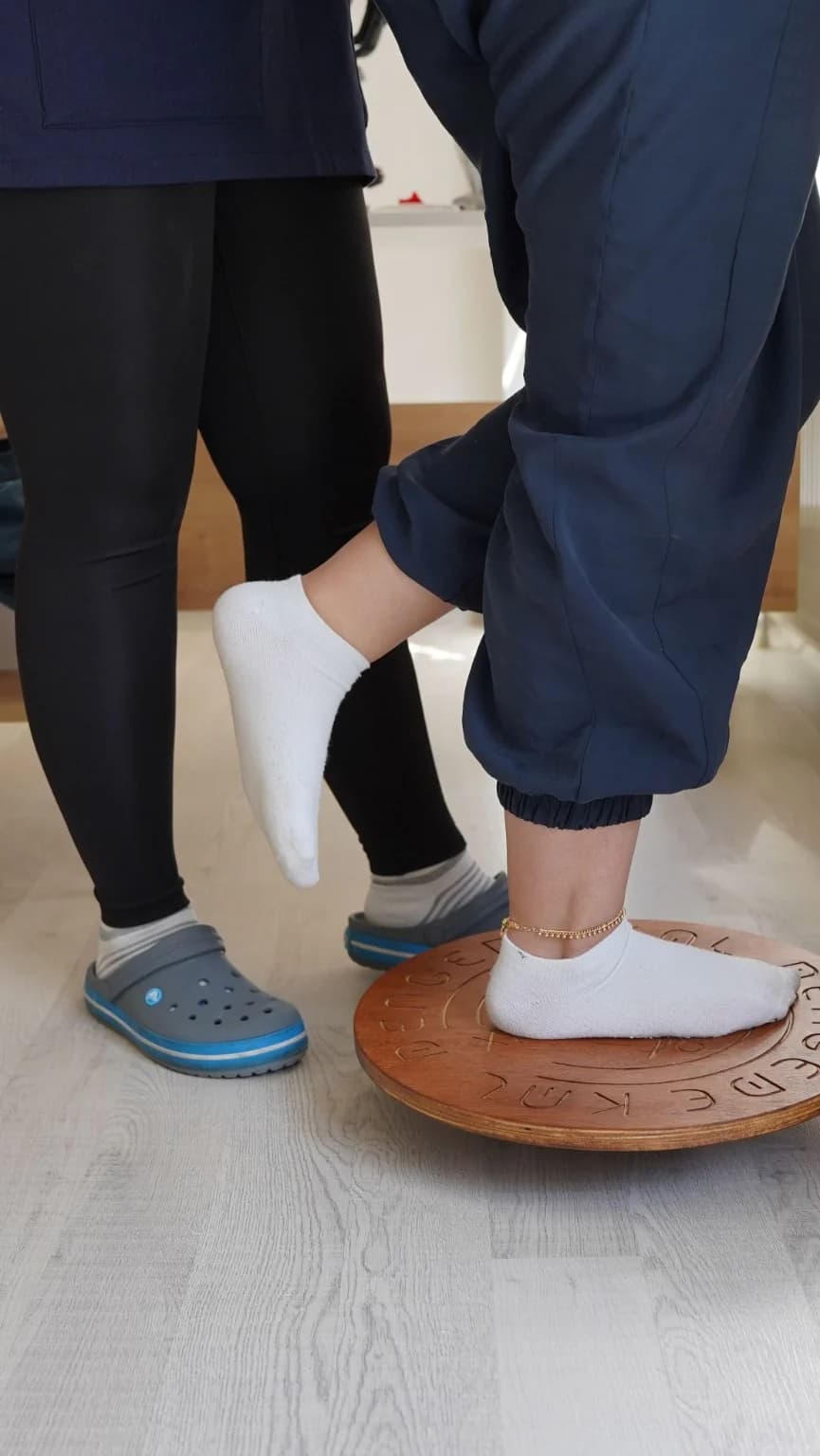
Why train balance and proprioception?
An ankle sprain may impair neuromuscular control. Single-leg balance, ankle muscle strengthening and functional training help reduce limitations and recurrence risk.
For some patients, wearing an ankle brace during higher-risk activities may also help prevent further sprains.
SURGERY IS THE EXCEPTION
Few acute lateral ankle sprains require surgery.
Initial treatment is usually nonsurgical, including for many complete tears. Surgery may be considered for persistent instability despite appropriate rehabilitation, specific associated injuries or unstable syndesmotic injuries. Syndesmotic ankle sprains differ from typical lateral sprains and require specific assessment.
RETURN TO SPORT
PAASS: return based on criteria, not just the calendar.
The international PAASS consensus identifies five domains for assessing readiness after an acute lateral ankle sprain.
Pain
Pain during sports and in the preceding 24 hours.
Ankle impairments
Range of motion, muscle strength, endurance and power.
Athlete perception
Confidence, perceived stability and psychological readiness.
Sensorimotor control
Proprioception and dynamic balance.
Sport performance
Hopping, agility, sport-specific movement and ability to complete a training session.
Being pain-free does not, by itself, mean you are ready.
PAASS guides what to assess; it does not define one universal test or cutoff for clearing every athlete.
FREQUENTLY ASKED QUESTIONS
Common questions about ankle sprains
Does every ankle sprain require a walking boot?
No. Most lateral ankle sprains can be managed with removable functional support and progressive rehabilitation. A boot may be used temporarily for more severe injuries.
Does a complete ligament tear always need surgery?
No. Many complete tears are managed without surgery. Clinical examination, functional stability and response to rehabilitation guide decisions.
Can I put weight on the ankle after a sprain?
In many cases, weight-bearing can resume progressively as tolerated with appropriate protection. Inability to take four steps, localized bone tenderness or deformity requires assessment to exclude a fracture.
When can I run or play again?
This depends on injury severity and recovery. Pain, strength, mobility, balance, confidence and sports performance should be assessed using the PAASS domains.
Why does my ankle keep giving way?
Repeated sprains, giving-way episodes or persistent pain may indicate chronic instability or associated injuries and warrant reassessment.
REFERENCES
Scientific evidence
Guidelines and consensus statements supplemented by literature on syndesmotic injuries. Educational content; not a substitute for medical consultation.
- Martin RL et al. Ankle Stability and Movement Coordination Impairments: Lateral Ankle Ligament Sprains Revision 2021. J Orthop Sports Phys Ther. 2021;51(4):CPG1–CPG80. View publication ↗
- Smith MD et al. Return to sport decisions after an acute lateral ankle sprain injury: introducing the PAASS framework. Br J Sports Med. 2021. View publication ↗
- Dubois B, Esculier JF. Soft-tissue injuries simply need PEACE and LOVE. Br J Sports Med. 2020;54:72–73. View publication ↗
- Vuurberg G et al. Diagnosis, treatment and prevention of ankle sprains: update of an evidence-based clinical guideline. Br J Sports Med. 2018;52:956. View publication ↗
- van Dijk CN et al. Classification and diagnosis of acute isolated syndesmotic injuries: ESSKA-AFAS consensus and guidelines. Knee Surg Sports Traumatol Arthrosc. 2016;24:1200–1216. View publication ↗
INDIVIDUALIZED ASSESSMENT
The goal is not only to reduce swelling, but to move safely again.
Understand your injury and plan treatment and recovery according to your activities.